- Daily care need first; diagnosis or product category second.
- Fit is checked before quote or final configuration.
- Sollevita does not replace medical or professional assessment.
Assessment
Careful assessment
This page describes Spinal cord injury only as context. A recommendation comes from the daily situation, mobility, transfer, caregiver and room.
Typical daily-life difficulties
- Standing up or sitting down may need more control.
- Transfer can become physically demanding for family members.
- Long sitting times require better planning.
Important medical note
Seating at Home with Spinal Cord Injury is presented as practical home-care context, not as medical advice. Sollevita is not described as treating, improving or replacing clinical assessment for any diagnosis. The page uses the condition only to help families describe everyday seating, standing, transfer and caregiver-access problems more clearly. Any clinical decision, pressure-care question or rehabilitation plan should be discussed with the appropriate professional. The product decision here is limited to whether a care chair workflow may fit the home routine.
Start with the daily need
The useful question is not simply whether someone has this diagnosis. The useful question is what happens during the day: difficulty standing, one-sided weakness, fatigue, long hours sitting, changing posture, side transfer, caregiver access or room movement. That needs-first approach protects the page from making medical claims and makes it more helpful for families. A diagnosis may explain why a routine is difficult, but the actual chair decision still comes from the person, room, transfer route and caregiver workflow.
Functions that may be checked
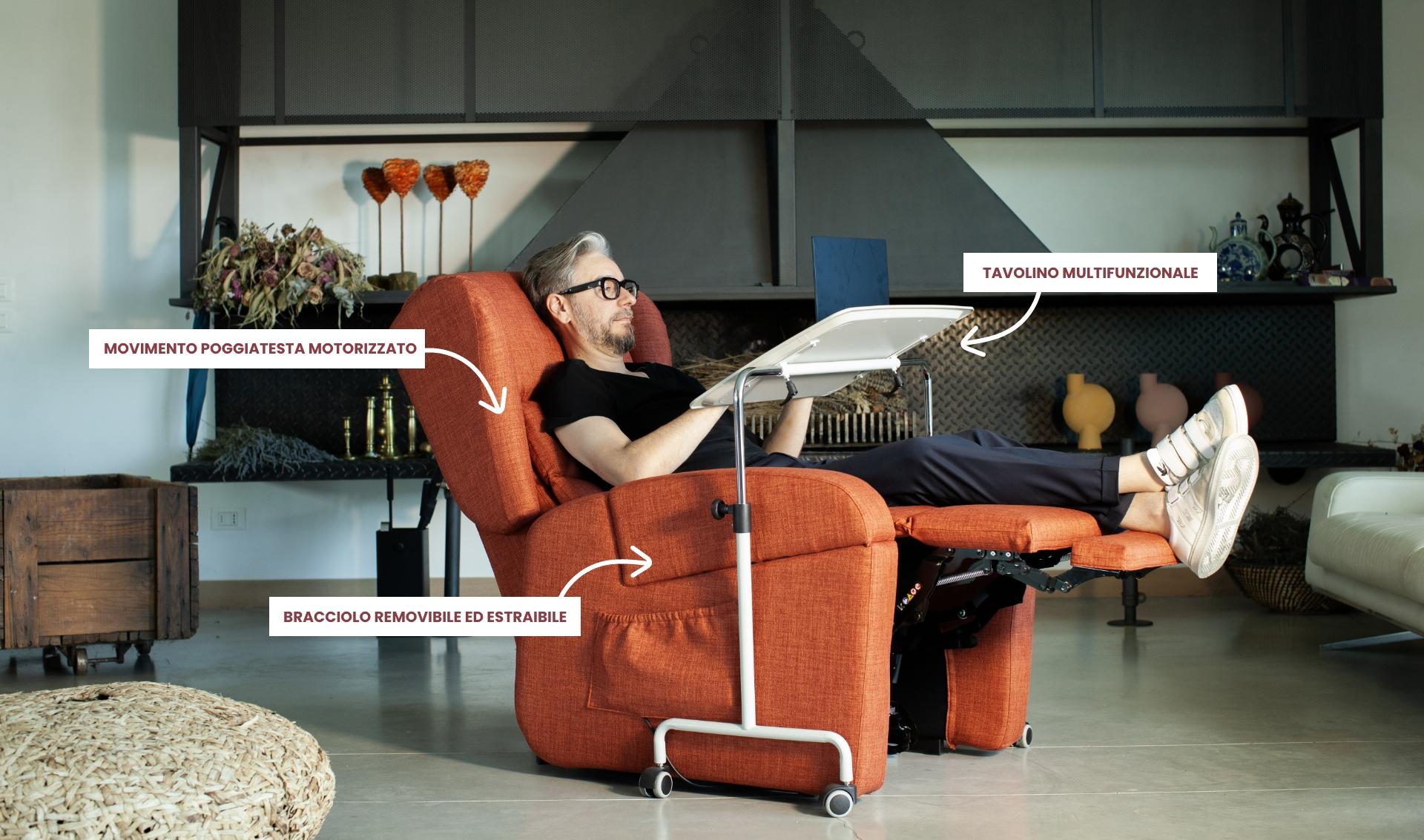
Depending on the daily pattern, the relevant functions may include vertical lift, side access through removable armrests, a flat stretcher position, Zero Gravity tilt, head support, wide-seat configuration or battery movement. Those functions are explained in the feature hub, while the who it is for hub connects them to everyday care situations. The point is to identify the function that changes a real task, not to assume the same configuration for everyone with the same diagnosis.
When Sollevita may not be suitable
Sollevita can be more than needed when the only requirement is a basic lift-and-relax chair or a small comfort improvement. It may also be the wrong next step if the home has access limitations that cannot be solved, if clinical equipment is required instead, or if the main issue is outside seating and transfer workflow. This page should make that clear because honest limits build trust and keep the recommendation aligned with the family situation. The fit check exists to confirm suitability before price is discussed.
What to prepare for consultation
Prepare a short description of the hardest daily moment, current chair or bed setup, transfer route, mobility level, sitting time and caregiver availability. Add approximate measurements if possible: seat width, body size, door width and where the chair would stand. If the condition changes over time, describe what is stable and what is changing. This gives the consultant enough context to decide whether to focus on lift, transfer, posture, flat positioning, mobility around the room or a simpler alternative.
Caregiver and room questions
For this context, the caregiver and room questions are often as important as the diagnosis. Who helps during the most difficult movement? Can that person reach the chair safely? Is the bed close enough for transfer, or does the chair need to move? Does the person sit for many hours, need head support, or require a flatter position for care tasks? Answering those questions gives the fit check practical information without making assumptions from diagnosis alone.
Why the fit check comes before quote
The fit check protects both sides of the decision. The family avoids buying a complex product when the home routine does not need it, and the consultant avoids recommending a chair without enough context. For condition-related pages, this is especially important because the same diagnosis can create very different daily needs in two homes. The quote should follow only after person, room, transfer route, caregiver workflow and likely functions have been reviewed.