
Premium care riser recliner chair
Comfort, independence and personal care

Practical advice on riser recliner chairs and daily care

Looking after your own comfort, or that of someone you love, means paying attention to everyday actions. Here you will find guides to choosing, using and maintaining an electric riser recliner chair with integrated care features, designed for older people, people with reduced mobility, family members and caregivers.

Every article starts from a real need: finding a well-proportioned seat, changing position, organising transfers or making daily care easier. Clear explanations, comparisons and practical worksheets help you understand the chair’s functions and assess what may be useful in your situation.

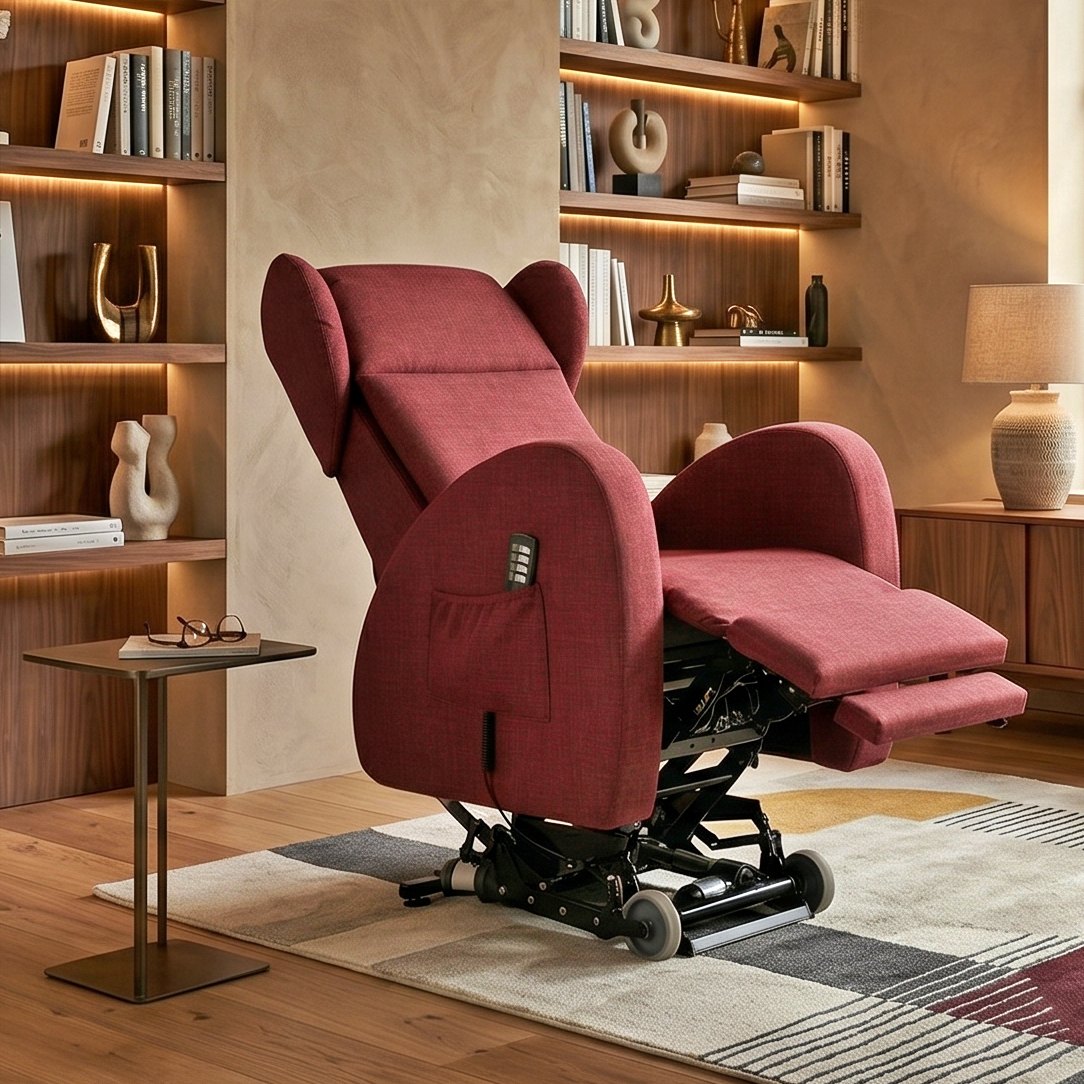
Red riser recliner chair in a reclined position in a living room with a bookcase
Guides and in-depth articles

Start with your actual needs

How can you be more comfortable when you spend many hours sitting? What should you consider in transfers between bed, wheelchair and chair? Which adjustments can make the day easier for the person and for whoever provides their care?

Choose the topic closest to your situation. You will find in-depth articles on movement, posture, rest and daily care, together with practical guidance on dimensions, weight capacity, choosing, using and caring for the chair.

Dizziness when standing up: what to clarify before considering a riser recliner chair

Dizziness when standing up: what to clarify before considering a riser recliner chair

A dizzy spell while getting to your feet is not the same as difficulty rising from a seat. Before considering a riser recliner chair, it helps…

Read article
Incontinence and your chair: protecting the seat without hindering comfort and movement

Incontinence and your chair: protecting the seat without hindering comfort and movement

Protecting a chair when incontinence is present does not mean covering it with as many layers as possible. Protection has to be considered together with the…

Read article
When an older person drops heavily onto the seat: watch the descent too

When an older person drops heavily onto the seat: watch the descent too

When an older person returns to the chair with an abrupt movement, observing only the contact with the cushion can hide what happened beforehand. The guide…

Read article
Fabric or faux leather chair: how to choose for an older person

Fabric or faux leather chair: how to choose for an older person

Choosing between fabric and faux leather is not just a question of stains. Before ordering, what matters is the feel the person prefers, the clothes they…

Read article
Multiple sclerosis and heat: organising the rest spot on sultry days

Multiple sclerosis and heat: organising the rest spot on sultry days

On sultry days, a rest also depends on the environment around the seat. This guide suggests looking at the sun, fresh air, controls within reach and…

Read article
Eating in an armchair: supports and a meal plan when mobility is reduced

Eating in an armchair: supports and a meal plan when mobility is reduced

Eating in an armchair calls for a set-up designed for the meal, not just a surface near the seat. This guide helps you prepare the items…

Read article
Chair with wheels for older people: changing rooms without changing seats

Chair with wheels for older people: changing rooms without changing seats

A chair with wheels can be useful when the aim is to reach the table, be with family members or change surroundings without adding a change…

Read article
Wheelchair use and shoulder pain: which transfers to review during the day

Wheelchair use and shoulder pain: which transfers to review during the day

When you use a wheelchair, the work your shoulders do is not just about pushing. Moving to the bed, reaching an armchair and getting back again…

Read article
After a femur fracture: how to assess a chair for returning home

After a femur fracture: how to assess a chair for returning home

After a femur fracture, choosing a chair means first of all working out how to apply, at home, the instructions you have been given. The weight…

Read article
After a stroke: when someone leans to one side while seated

After a stroke: when someone leans to one side while seated

When a person leans to one side after a stroke, simply saying which way the upper body tilts is not enough. The guide suggests describing an…

Read article
Personal chair in a care home: what to agree with the home before buying

Personal chair in a care home: what to agree with the home before buying

Choosing a personal chair for someone who lives in a care home calls for a discussion involving the user, the family, the home and the supplier.…

Read article
Sliding down in a chair: the role of seat, supports and movements

Sliding down in a chair: the role of seat, supports and movements

Ending up further forward on the seat is not, in itself, enough to blame the problem on the fabric or the motor. The guide distinguishes the…

Read article

The functions explained through everyday actions

The value of a chair cannot be understood from the list of adjustments alone. What matters is understanding how a well-proportioned seat, adjustable support or side access can fit into the person’s habits and into the work of those providing care. The in-depth articles link these everyday actions to Sollevita’s features, with examples, comparisons and worksheets for gathering useful information. A way to move from reading to more precise questions, keeping comfort, preferences and everyday needs at the centre.

How the consultation works

3 steps to define the perfect Sollevita for you

Sollevita comes fully equipped for home care. Our job is to understand whether it can meet your needs and to guide you clearly before, during and after delivery.

1

Tell us about yourself

Tell us about your needs, or those of the person who will use Sollevita. Height, weight, hours spent in the chair, level of independence and daily needs help us understand how the product will be used every day.

2

Let's assess together whether Sollevita is right for you

The Sollevita Team listens to your needs, explains every function and assesses sizes, weight capacity and how the chair will be used. We explain precisely whether and how Sollevita can meet the needs of the person and their daily life.

3

Delivery and support

We arrange delivery and a complete explanation of the product, so that you get to know all of Sollevita’s functions and use them correctly. After purchase, the Sollevita Team remains your direct point of contact for warranty, spare parts, tutorials, video calls and technical support over time.

Next step

The right choice starts with a conversation

For such an important choice, talk to the people who make it. Write to us: the Sollevita Team will reply to you directly, not a call centre. Our advisers know the chair inside out, from the mechanisms to the adjustments, and they listen to you to offer clear explanations, technical expertise and personalised advice.

Write to the Sollevita Team

Our consultants listen to you, answer your questions and give you all the information you need to assess Sollevita clearly.
Free · No obligation · Reply within 24h
Frequently asked questions

Answers to help you find your way through the guides and in-depth articles

The guides start from daily activities and help you formulate more precise questions. Here is how to choose a topic, understand the functions and use the worksheets provided.

Start with your actual needs: getting up, finding a more comfortable seat, resting, organising a transfer or looking after the chair. The categories also cover dimensions, weight capacity and buying criteria. Choose the question closest to your situation and use the article’s table of contents to go straight to the section that interests you. When the need relates to a particular condition, the Specific needs pages help connect the article to the person’s circumstances.

Yes. Many articles are dedicated to the everyday actions that involve family members and caregivers: preparing a transfer, adjusting the height for personal care, understanding the controls or organising a move to another room. The guides help distinguish the contribution of the chair from the role of the person providing care and of other aids. You can read them together with the person concerned, starting from their preferences and the activities already planned, to note down any doubts and make the next discussion clearer.

The content is curated by the Sollevita Team and combines technical knowledge of the chair with experience gained in conversations with people, family members and carers. Behind it is La Castellana, a manufacturer active since 1969 with more than 20,000 customers served. Everyday questions and situations help explain construction, supports and adjustments in a concrete way. The in-depth articles help you get to know the product and prepare useful questions, alongside the guidance of the professionals involved in the person’s care.

The guides explain what the chair does and how its features can fit into daily activities. Vertical height adjustment of the whole chair, for example, changes the height of the seating surface; how a person should be transferred, on the other hand, depends on their abilities, the aids available and the guidance they have received. This distinction helps you understand Sollevita’s contribution without confusing it with the choice of a care technique or a treatment, which requires an individual discussion with those involved in the person’s care.

Use them to note down measurements, describe habits and prepare questions to share. They can make it easier to talk things through with the Sollevita Team or with those involved in the person’s care. You do not need to carry out a transfer or try an unusual position to tick a box: you can record what you observe in the daily routine. The worksheets are practical tools for gathering information, not diagnostic tests or instructions that replace professional guidance.

Yes. The articles explain what to look at beyond the upholstery or the number of motors: truly independent movements, vertical height adjustment, tilt-in-space, seat dimensions, construction, removable covers and service. You can use these criteria to ask the same questions about the products you are considering. The Real differences page also includes a comparison checklist. The aim is to understand which features are of real, practical use to the person, not to judge value solely by the amount of equipment.

Yes. Write to the Sollevita Team through the Contact page and tell us what you would like to understand, for yourself or for someone you love. A concrete question about the seat, the movements or day-to-day management helps us give relevant explanations. The experience shared with customers and family members also guides the choice of upcoming articles. Technical questions are handled by the Sollevita Team; health-related matters should be discussed with the professionals involved in the person’s care.