
With Parkinson’s freezing after standing up, reaching a standing position does not mean being ready to walk straight away. A riser recliner chair can support the transition from sitting, but it does not unlock the first step. Preparation needs to take into account supports, timing, the space in front of the chair and the usual help. This guide helps you observe where the sequence breaks down and prepare a useful trial with the professionals, without proposing a universal technique for overcoming freezing.
In brief
Getting up from the chair and managing to start walking are two distinct moments. The rise function and the armrests can help with preparation, but they do not treat freezing. The clear path in front of the seat also matters; any visual or rhythmic cues should be agreed with the physiotherapist. Noting down spontaneous episodes lets you describe the difficulty more accurately without provoking it for a trial or a video.
What to observe when the person is standing but cannot get going
Freezing is an involuntary interruption of movement: the person may feel as if their feet are stuck to the floor, even though they want to walk. Parkinson’s Europe notes that it can occur when starting to walk, when turning, near doorways or obstacles and when attention is taken up by something else. It does not affect everyone with Parkinson’s. [1]
The useful distinction for whoever is observing is the exact moment of the difficulty. Is the person unable to lift off from the seat? Do they reach a standing position but not start the first step? Do they set off and then freeze at the first turn? Describing these situations separately avoids expecting the chair to solve the whole sequence.
You do not need to interpret the symptom on your own. You can report “he stops in front of the door after getting up” rather than “the chair doesn’t help him enough”. The professional can assess the movement; the Sollevita Team can clarify whether measurements, supports and controls match the preparation needed.
Preparation begins with the seat and the path
Before assessing how high the chair rises, observe how the person is sitting. If they have to shuffle forward repeatedly to reach the floor or keep looking for something to hold on to, the seat size and the arrangement of objects deserve attention. A powered function does not make the point from which the movement starts irrelevant.
The space in front must allow the usual sequence, including any walking frame. Its position should be decided according to the instructions received: it is not something to add at the last moment, when the person is already standing and looking for it.
What happens after the first steps also matters. A door, a tight bend or a coffee table can become points to describe in the consultation. The trial does not necessarily end at the edge of the seat; at the same time, it must not turn into an improvised obstacle course to assess the person.
To prepare for the discussion, a photograph of the empty room and a description of the route are enough. There is no need to make the person repeat a difficult turn: what matters is showing the space available and the points where getting through becomes complicated.
Armrests and a gradual rise: help getting started, not a cure for freezing
The armrests must be within reach and suited to how the movement is prepared. Being able to remove them is useful for other activities, but it does not mean they should be taken off while the person is using them as a support to get up. It is important to distinguish side access from a seat that is ready for standing up.
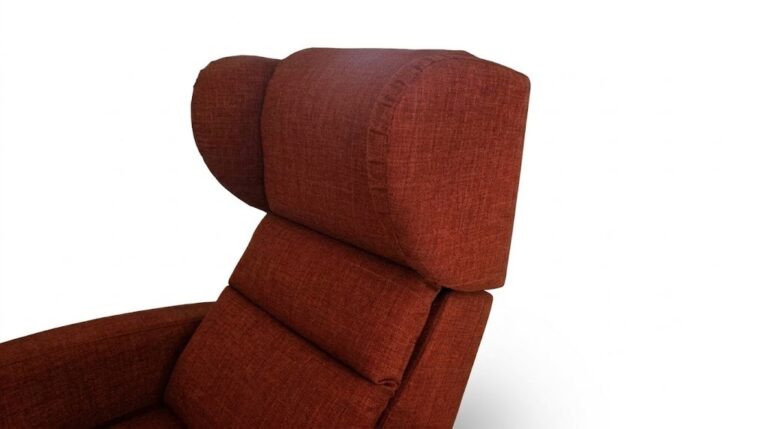
Sollevita offers seat widths of 52 or 63 cm and three seat depths. The choice is a way to assess together back support, leg position and how easily the armrests can be reached. The three-layer seat construction combines a sprung seat base, individually pocketed springs and a comfort top layer: softness alone does not describe the quality of the starting position. [3]
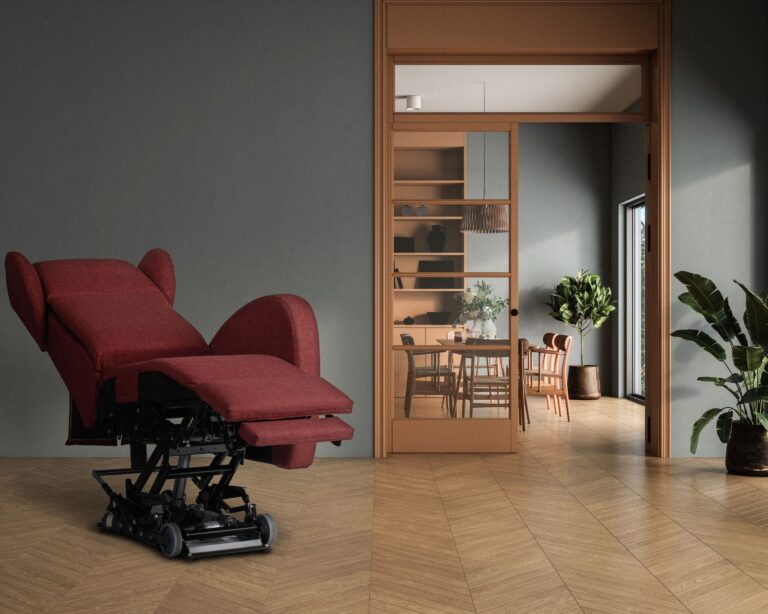
The rise function gradually moves the pelvis up and forward. Vertical height adjustment, on the other hand, changes the height of the whole chair with the person seated or lying down. They are distinct movements, and neither of them automatically produces the first step. You can see them on the page about Sollevita’s functions and measurements. [3]
The motor system comprises 5 to 8 independent motors, depending on the weight capacity. For this trial, however, the decisive question is not how many there are: it is whether the person and whoever is helping them understand the controls, how to stop the movement and the appropriate sequence. The adjustments should be learnt on the chair actually delivered.
When the movement stops, do not rush
One organisational mistake is to treat the help as finished once the seat has completed its movement. The person may need to regain their balance, get their bearings or use a strategy they have already learnt. Do not increase the chair’s push to “get them going”, and do not pull them by the arms or drag them forward.
The practical response must be agreed with those involved in the person’s care. Ask for three points to be clarified: who operates the control, which signal indicates a pause and what to do if the person cannot start walking. The family member should not have to invent a solution in the middle of a difficult moment.
If verbal cues are needed, use the agreed ones and avoid several people talking at once. Even a well-meaning demonstration can become confusing when one person explains the remote control, another moves the walking frame and a third encourages the person to step forward.
There is no waiting time that is the same for everyone. The pause must not turn into a test of how long the person can stay on their feet. If the person is unstable, do not insist: follow the approach to assistance, or to returning to the seat, set out by the professionals.
Cueing and ON/OFF periods: what to bring to the physiotherapist
The term cueing refers to the use of prompts, for example visual or rhythmic ones, to support the organisation of movement. Physiotherapy can work on freezing and on daily activities, while occupational therapy can help review the environment and the way aids are used. The intervention should be adapted to the person. [2]
Neither a strip on the floor nor a rhythm is an accessory to be added automatically in front of every chair. Before using them, ask which cues are suitable, where they should be placed and how the person providing care should act. This article does not replace that learning.
When reporting episodes, it can also be useful to note the time of day and how they relate in time to the treatment already prescribed. Freezing may occur more often during OFF periods, but a single episode does not allow you to conclude on your own that it is a medication problem. [1]
Do not change times or doses to arrange a better demonstration. Note what happens in the daily routine and discuss it with the neurologist. A commercial trial must not replace clinical assessment, nor should it be based only on the most favourable moment.
A record sheet for describing an episode without provoking it
This table organises the account of episodes that have already happened. It does not assign scores and does not measure the severity of Parkinson’s. It can be filled in by the person or by a family member, also recording the user’s own words.
| What to note | Example of useful information | What to avoid |
|---|---|---|
| Exact moment | Before getting up, after getting up, at the first turn | Lumping everything together under the word “stuck” |
| Starting situation | Supports, seat, usual aid, control | Changing the set-up to provoke an episode for a test |
| Space | Nearby door, coffee table, turn, clear path | Photographing only the chair and not the way through |
| Context | Time of day, hurry, conversation, next activity | Deducing the cause from a single episode |
| Help used | Cue already taught, planned assistance | Improvising pulling, pushing or new signals |
| Outcome | Setting off again, pause, assisted return to the seat | Judging the result by speed alone |
An illustrative example: “After getting up, he stopped before turning towards the corridor; the family member was talking and the walking frame was already in front of him.” This description does not prove which factor caused the episode, but it makes it possible to discuss a concrete situation.
For a few days, you can use the same sheet for the most significant episodes. There is no need to count everything. It is also important to describe when the sequence goes smoothly, because the consultation should not see only the worst moments.
Sitting back down is also part of the check
The initial request often concerns getting up, but the return can be just as important: approaching, changing direction, finding the supports and controlling the descent are different steps. If the problem appears when turning in front of the chair, it should not be mistaken for insufficient assistance from the motor.
Used in reverse, the rise function can support the return to the seat. The practical method must, however, be checked with the person, without using the height as an invitation to drop into the chair. In this phase too, stability, controls and the usual help all matter. [3]
During a demonstration there is no need to repeat many rises in a row. It is more useful to understand one relevant sequence and note down any doubts. If fatigue or discomfort appears, the trial stops; you do not carry on just to complete the list of functions.
When the chair helps and when the assessment needs to be broadened
The chair can play a role when the difficulty includes a seat that is out of proportion to the person, supports that are hard to reach or a sit-to-stand transition that benefits from powered assistance. It does not treat freezing and does not make physiotherapy, a walking frame or other aids already planned unnecessary.
Dizziness and feeling faint after getting up are not the same as freezing: they may require a different assessment. Among the possible causes of difficulty at this stage, Parkinson’s Europe also mentions a drop in blood pressure when moving into a standing position. Report these episodes to the doctor, without trying to correct them simply by increasing or reducing the chair’s movement. [1]
Falls, near-falls or a marked change in mobility warrant a discussion with the professionals. There is no need to wait for a new product to be delivered. In the event of sudden severe symptoms or loss of consciousness, seek urgent medical help.
Prepare a trial centred on the person
For the technical side, gather height, weight and, if available, the measurements of the current seat. Describe which hand operates the controls, which supports the person looks for and which aids are part of their day. A photograph taken from the side, with consent and without risky manoeuvres, can help; it is not required to get started.
Take the sheet to the professional who knows the movement and to the Sollevita Team, each for their own area. The former defines how the sequence and the difficulties are managed; the latter explains mechanics, measurements and functions. A video call can clarify the product, but it cannot replace a medical assessment of balance.
The trial is valuable if it lets you answer a concrete question: “Does the chair better prepare the point from which the movement starts?” Not if it only shows that the person managed to walk on one occasion.
FAQ
Common questions
Does the rise function solve freezing after standing up?
No. It supports the transition from sitting towards the upright position, but it does not treat freezing when starting to walk. You need to distinguish the help the chair gives from the management of the first step and of balance.
Are the removable armrests also useful while getting up?
Being able to remove them relates to other uses, such as sitting at a table and side access. While getting up, if they are part of the planned supports, they must stay correctly fitted. “Removable” does not mean “to be removed every time”.
Is it right to encourage the person to walk as soon as the motor stops?
Not automatically. The end of the mechanical movement does not mean the person is ready to set off. Timing and the way help is given should be agreed: do not pull, do not push and do not prolong an unstable position.
Can I put visual cues on the floor to help with the first step?
They should be assessed with the physiotherapist or the occupational therapist. Type, position and use must suit the person; adding random cues can make the sequence less clear. [2]
Do I need to film an episode to ask for a consultation?
No. A precise description and photographs of the space are often enough to get started. Any video requires consent and must never be obtained by provoking a freezing episode or repeating a risky manoeuvre.
What result should we look for when trying the chair?
Supports within reach, a size in proportion to the person, controls that are understood and a sequence compatible with the usual help. The absence of freezing in a single demonstration does not prove that the chair prevents it in other situations.
Reference sources
[1] Parkinson’s Europe, Symptoms of Parkinson’s, Freezing and Falls sections. Characteristics of freezing, contexts in which it occurs and the distinction from dizziness on standing up. Open the source
[2] Parkinson’s Europe, Treatment, Physiotherapy and Occupational therapy sections. Individual interventions for movement and daily activities. Open the source
[3] Sollevita, riser recliner chair with integrated care features: measurements, construction and movements. Open the source
From the observed sequence to choosing the chair
On the page Sollevita for a person with Parkinson’s you will find a general overview of the needs. Bring your notes on getting up, the first step and sitting back down to the Sollevita Team: the consultation can then focus on the supports and the relevant functions, without confusing the support the product provides with treatment of the symptom.