
Understanding how to test a motorised chair means observing starting, stopping, noise, support points and the return to the seated position during the activities that really matter. The number of motors alone does not tell you what using the chair is like. A good demonstration gives the person time, distinguishes between the functions and makes clear how to stop them. The ten checks in this guide are observation criteria: they are not ten manoeuvres to repeat on every motor, nor an endurance test of the product.
In brief
A useful trial starts with a few daily activities and observes one movement at a time: how it starts, how it is stopped and how it brings the person back to their usual position. Noise and the response of the controls should be compared with the operation intended by the manufacturer, without asking the person to reach every end of travel. The ten checks help you gather concrete questions; they are not an invitation to repeat manoeuvres that tire the person or cause discomfort.
Before you press: what the trial should demonstrate
A family member may be interested in the lying-down position, while the person mainly wants to read without constantly rearranging the cushions. Making these priorities clear avoids spending the whole demonstration on the most eye-catching functions and too little time on the daily activity.
Write down two or three goals: adjusting the backrest, reaching the remote control during a break, supporting the move to standing where this is intended, or bringing the chair to a height that makes care easier. They are not necessarily the same for everyone.
The trial should distinguish between what the staff demonstrate and what the person will actually use. A movement observed with the chair empty explains the mechanics; a practical trial helps you assess support points and controls. One does not replace the other, and neither requires going beyond the weight capacity limits or individual recommendations.
Preparing the space, the person and the handset
The area where the chair moves must be clear. Side tables, cables, rugs, clothing, children and pets must not get into the path of the footrest or under the frame. The chair should be positioned and stabilised according to the instructions, without using the wheeled base as a support for getting in or out. [2]
Before involving the person, ask for the configuration, assembly and operation to be checked. Whoever leads the demonstration must know the product and explain what is going to move. There is no need to change the usual mobility aids or to improvise transfers in order to start a sales trial.
Identify together the relevant control and how to stop the movement. Do not assume there is a universal stop button or an automatic return. You need to know how the actual handset behaves and check that the person who will use it is able to manage it.
Ten checks for observing the movements without adding extra manoeuvres
Use the table as a guide during a normal demonstration. The items can be observed within the same sequence, without performing ten full cycles for each function. All operations must follow the manual and the pauses it specifies.
| Check | What to observe | What to note |
|---|---|---|
| 1. Starting | Does the movement match what was explained? | Surprise, irregularity or doubts about the control |
| 2. Stopping | How is it stopped according to the intended system? | Understanding and the response observed |
| 3. Resuming | Can the adjustment continue in an understandable way? | Any unexpected changes |
| 4. Return | Is the reverse direction clear after the specified pause? | Button and sequence to remember |
| 5. Travel limits | What are the permitted limits of the function? | Explanation received; there is no need to reach them all |
| 6. Noise | Does the sound remain consistent throughout the movement? | Knocks, squeaks or changes to be clarified |
| 7. Support points | Do the person and the chair remain in the intended condition? | Shifting or discomfort reported |
| 8. Sequence | Are two consecutive adjustments understandable? | Steps that need explaining |
| 9. Final position | Do you get back to the agreed position without trial and error? | Help needed or any remaining doubt |
| 10. Consistency | Does the behaviour remain recognisable in the next intended use? | Differences observed, without deliberately repeated tests |
The checklist helps you describe the experience of use. Technical measurements of speed, noise or stopping time, on the other hand, remain a matter for the manufacturer’s tests and documentation.
Smoothness is not just about moving slowly
A slow movement can still be hard to follow if it starts differently from what was expected or if the person does not know how to stop it. Perceived smoothness includes continuity, predictability and the chance to communicate during the adjustment.
Ask the person what they feel: “Did that surprise you?”, “Has the support changed?”, “Do you want to stop?”. Do not turn every hesitation into a motor problem. It may be necessary to explain the function better, review the support points or choose another permitted position.
Variations observed over the range of travel must also be explained in relation to the specific mechanism. A fault cannot be deduced from a different speed, but neither should unexpected behaviour be dismissed with “it’s normal” without an explanation. The Sollevita Team can clarify how the product is expected to respond.
Stopping and return: control comes before the final position
A demonstration that only shows the maximum opening leaves an important question unanswered: how do you go back? Before choosing a chair, whoever will use the controls needs to know the sequence that is useful for their own activities.
Sollevita offers a progressive, controllable rise function. This does not mean the same movement can be used for any mobility need: it must be distinguished from the vertical height adjustment of the whole chair and from the adjustments for resting. [1]
Check that the handset can also be reached in the position that matters, not only with the chair closed. If the controls are operated by the person providing care, the person seated must be able to ask for a pause. Do not start the movements before the person is ready, or replace their pace with that of the demonstration.
There is no need to learn all the functions in the same session. It is more useful to understand one relevant sequence well and to know whom to ask about the others, without leaving any uncertainty about how to return from the position just shown.
Normal noise and noise that needs explaining
Mechanical movements can make a noticeable sound. The aim is not to demand absolute silence, but to know how the product behaves and to distinguish a usual noise from a change that needs attention.
Television, conversations and how far away the phone is all affect what can be heard in a recording. A short video can help the Sollevita Team recognise a noise; comparing decibel values, on the other hand, requires measurements taken under the same conditions.
A new knock, a squeak, a vibration or a noise associated with an abnormal response deserves an explanation. Do not bring your hands or tools close to the linkages to locate the source, and do not lubricate parts at random to make the sound go away. Describe the movement and leave the technical check to customer support.
Tell the functions apart before comparing the motors
Sollevita incorporates from 5 to 8 independent motors, according to the weight capacity. This description should be linked to the actual movements, not read as a score. More options are valuable when they are understandable and relevant to how the person will use the chair. [1]
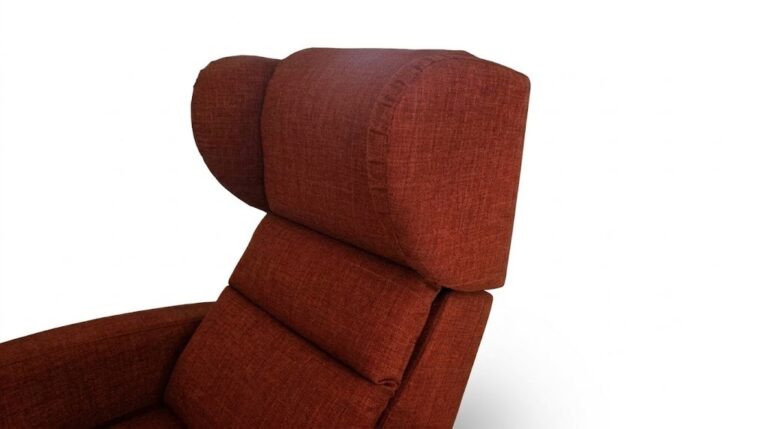
The rise function helps the person towards the standing position. Vertical height adjustment changes the height of the whole chair while the person remains seated or lying down. Recline changes the angle of the backrest; tilt-in-space tilts the seat and backrest together as one unit. The Push Head powered headrest adjusts the support for the head and neck. [1]
Zero Gravity is a configuration obtained by combining adjustments, not a synonym for tilt-in-space alone. During the demonstration, ask for the function being operated to be distinguished from the position reached. The differences between a standard riser recliner and Sollevita are easier to understand this way than by simply counting the buttons.
How to document a useful demonstration
A short, continuous video can make a sequence recognisable if it shows the chair and keeps the audio. Where relevant, the shot can include the handset without getting close to the mechanism. It must be clear which configuration is being shown and whether the person is present.
Filming should be done with consent and without unnecessary personal data. Do not have an uncomfortable movement repeated to get a better shot. If an anomaly appears, the footage does not become more important than stopping the trial.
A demonstration documents what was shown; it does not certify every aspect of performance. A recording of the empty chair, for example, does not by itself prove the user’s comfort; a recording with audio is not a laboratory acoustic test.
| Information to keep | Example of a useful note |
|---|---|
| Planned activity | Reading, with backrest adjustment |
| Configuration shown | References for the chair and the handset |
| Who used the controls | The person, a family member or demonstration staff |
| Step understood | Starting, stopping and return explained |
| Open question | Button to become more familiar with, or support point to check |
The checklist can accompany a request to the Sollevita Team. It is a guide so that you do not forget your questions, not a technical report that the customer has to certify.
When to stop the trial and not carry on
Stop if there is uncommanded movement, a damaged or wet control, a smell of burning, smoke, damaged cables or unexpected structural behaviour. Do not repeat the problem in order to film it. If the person is in the chair, the priority is assisting them safely, not searching for the faulty component. [2]
Discomfort, pain or difficulty tolerating the position also mean you should stop, without reaching the end of travel just to complete the demonstration. A sales trial does not establish the cause of a symptom and does not replace guidance from healthcare professionals.
For technical questions, use the Sollevita direct support channel. Describe what happened, without opening control units, motors or other components. In a situation of immediate danger, do not wait for the usual sales reply.
The mistakes that make the comparison less useful
Counting the motors without asking which functions they operate is the first mistake. The second is judging two chairs tried under different conditions: one empty and the other occupied, one with the controls explained and the other without instructions.
It is also of little use to press several buttons without knowing the permitted combinations, to reverse the direction repeatedly or to ask the person to try every extreme position. Quality shows in the intended use, not in putting stress on the product or on the person sitting in it.
A successful trial leaves you with a few clear pieces of information: which activities were checked, which controls are understood and which doubts remain. This is worth more than a long demonstration that ends with a vague “it does everything”.
FAQ
Common questions
How do you test a motorised chair without tiring the person?
Choose a few priority activities, follow the individual recommendations and have the controls explained first. There is no need to try every position or reach every limit. How long it takes depends on the person; stop whenever necessary, without completing the checklist at all costs.
Do more motors automatically mean higher quality?
No. The number describes one part of the configuration. Usefulness and quality in use also require understandable movements, support points, dimensions and a control that is easy to manage. On Sollevita, the motorisation ranges from 5 to 8 independent motors according to the weight capacity. [1]
Should there be a separate stop button?
It should not be assumed. You need to know how the movement is stopped on the actual handset and according to the intended system. The demonstration must clarify this point before use. Any behaviour that differs from what was explained should be reported to customer support.
How much noise should a powered chair make?
The reference is the operation intended by the manufacturer. A noise that is new, loud or associated with irregular movements should be reported. A home recording can help the Sollevita Team understand the problem, but on its own it does not allow the noise levels of different products to be compared.
Can I check the weight capacity by adding weights during the trial?
No. The weight capacity is checked in the documentation for the configuration, not with improvised loads. A practical trial must follow the instructions and the stated limit. The customer does not have to carry out a structural test to confirm a technical figure.
What should I record if I have doubts about a movement?
Note down the function, the control, the configuration and the circumstances observed. A short video can help only if filming is safe and has been requested or agreed. Do not reproduce a dangerous anomaly and do not open components to make a diagnosis.
Sources and references
[1] Sollevita — functions and motorisation of the chair in the approved documentation.
[2] La Castellana — Important warnings, operating document provided to the editorial team. The instructions for the specific model remain necessary for sequences and the use of the controls.
The next step: ask for a demonstration based on your activities
Prepare two or three goals and the doubts raised by the checklist. Check them against the movements of the Sollevita care riser recliner and discuss them with the Sollevita Team, to verify what you will really use instead of looking only at the number of motors.